


Communiqués
Lutte préventive contre la livrée des forêts
20 avr. 2026
L’été est à notre porte! Très bientôt, les arbres seront pleins de feuilles. Avant l’éclosion des feuilles dans les arbres, c’est le moment parfait pour inspecter vos petits arbres autour de la maison et éliminer les œufs de la livrée des forêts!
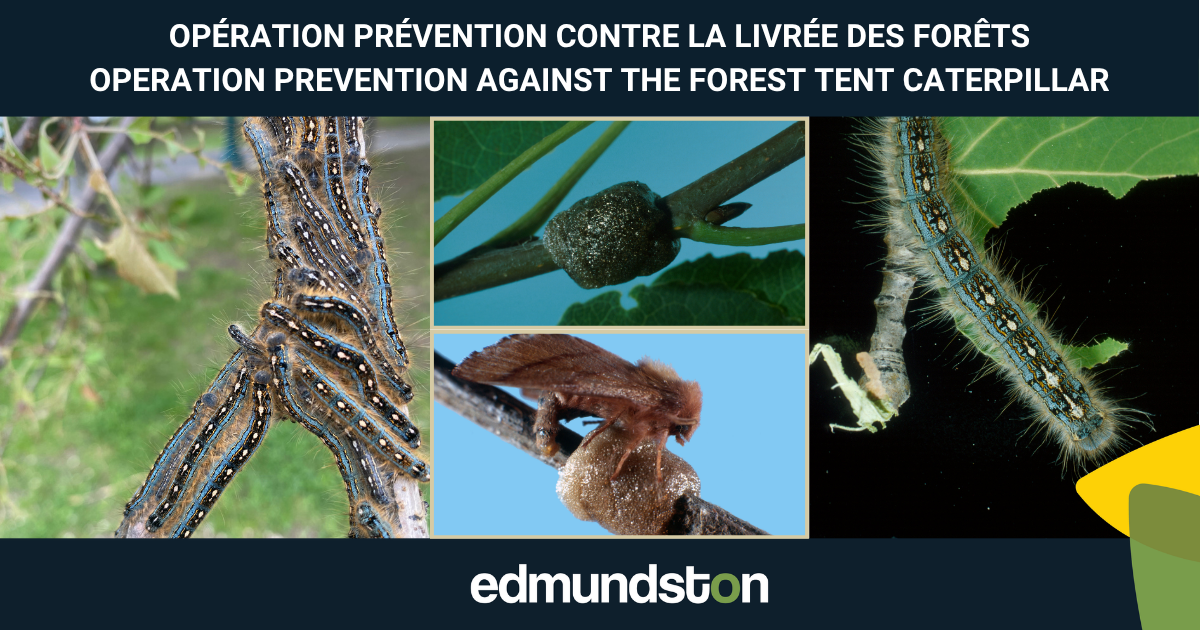
Depuis les trois dernières années, les chenilles de la livrée des forêts (Malacosoma disstria) ont envahi certains arbres feuillus dans notre communauté, causant d’importants dommages au feuillage et des désagréments pour les citoyens. Heureusement, les arbres ont des réserves et peuvent repousser des feuilles au courant de l’été. Cependant, si un arbre est défolié à maintes reprises pendant quelques années, il pourrait subir des conséquences irréversibles et finir par mourir. La bonne nouvelle : il est possible d’agir préventivement, pour limiter l'apparition de la livrée des forêts chez vous.
En ce début de saison, avant l’éclosion des œufs et le débourrement des feuilles, vous pouvez intervenir facilement et efficacement. Voici quelques conseils.
Comment repérer les œufs ?
- Ils se présentent sous forme de petits manchons brun-gris, collés autour des jeunes rameaux.
- On les trouve surtout sur des arbres comme les peupliers, bouleaux, cerisiers, pommiers, érables, etc.
- Ces œufs ont été pondus à la fin de l’été dernier, ont passé l’hiver et sont prêts à éclore au printemps.
Comment les enlever ?
- Inspectez vos arbres, en particulier les branches à la hauteur d’une personne.
- Grattez ou taillez les rameaux portant les œufs à l’aide d’un outil (couteau, sécateur).
- Immerger les œufs dans un sceau d’eau savonneuse pendant environ 24h.
- Évitez de laisser les œufs au sol, car les chenilles pourraient tout de même éclore.
Conseils de sécurité :
- Portez des gants, même si les œufs ne sont pas urticants.
- Les chenilles, une fois écloses, peuvent provoquer des réactions cutanées chez certaines personnes.
Pourquoi agir maintenant ?
- Vous protégez vos arbres contre une défoliation prématurée.
- Vous réduisez la propagation dans votre voisinage.
- Vous limitez les nuisances causées par les chenilles urticantes plus tard en saison.
À ne pas faire
SVP, ne mettez pas de bande collante sur le tronc de l’arbre. Cette méthode est inefficace dans la plupart des cas et risque d’endommager l’arbre.
- À l’éclosion, les chenilles sont déjà dans les arbres.
- Une grande proportion des chenilles sont dispersées sur des fils de soie portés par le vent. Plusieurs colonisent donc les arbres voisins sans passer par le sol.
- Des bandes collantes sur le tronc de l’arbre comportent plusieurs risques dont, l’asphyxie des tissus, des brûlures cambiales et l’arrachement de l’écorce.
-30-
CONTACT : Daniel Gautreau, Coordonnateur aux espaces verts, Service des travaux publics, 506.739.2103, daniel.gautreau@edmundston.ca