
Environment
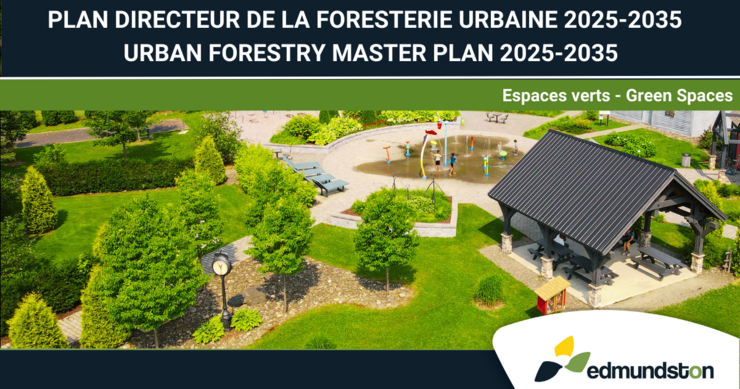
2025-2035 Urban Forestry Master Plan
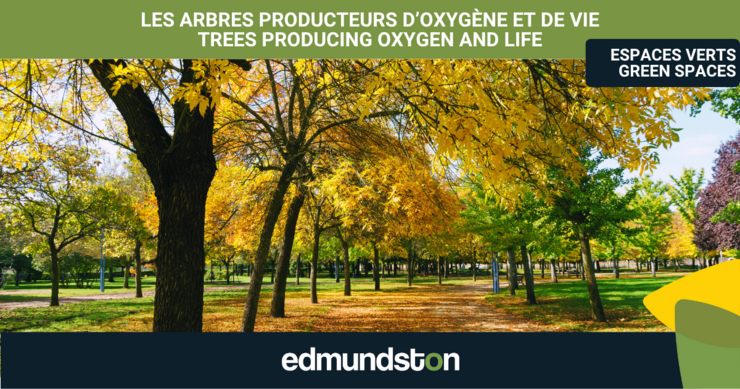
Trees are central to the quality of life of residents: they purify the air, beautify neighborhoods, provide shade, promote biodiversity, and help combat climate change. For all these reasons, the City is committed to:
• Protecting and enhancing existing trees
• Planting a minimum of 200 trees per year to achieve 40% forest cover in all areas of the urban perimeter
• Raising awareness and informing the community about the many benefits of the urban forest
• Managing municipal woodlands sustainably and responsibly
This plan is intended as a roadmap that will guide actions to protect and enhance the urban forest over the next ten years.
2024-2028 Environmental action plan
The 2024-2028 environmental action plan is the result of a consolidation of various plans, several years of effort and various actions carried out since 2000.
- 2000 - First assessment of municipal and community greenhouse gases (GHGs)
- 2010 - Adoption of the first Green Plan and organization of a public consultation
- 2011 - GHG reduction plan and signing of a resolution
- 2013 - Start of home collection of recyclable materials
- 2018 - Presentation of a sustainable development strategy
- 2020 - Adoption of a climate change adaptation plan
- 2022 - Implementation Municipal fund for improving the quality of drinking water (FMAQEP)
- 2024 - Environmental action plan
prioritized strategic elements
Ten elements are prioritized in this environmental action plan: water, air, soil, residual materials, climate change, energy, nature, sustainable mobility, nuisances, and municipal management. Each of these elements has objectives, specific actions to achieve these objectives, and precise indicators allowing for these actions to be measured. Citizens can follow the municipality’s progress here:
dashboard (online soon)
green spaces
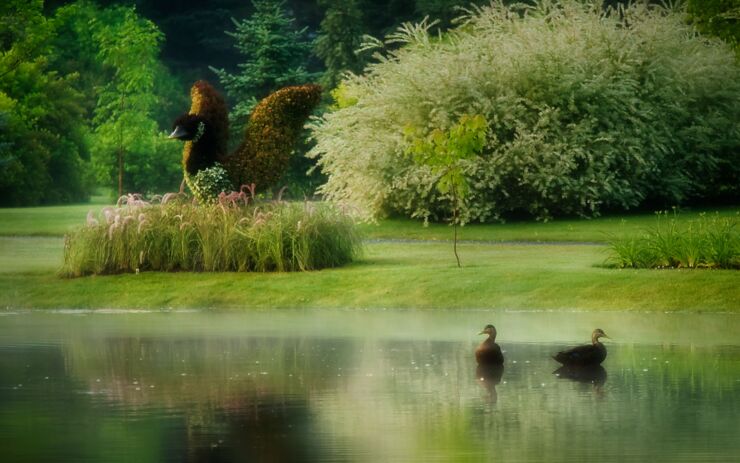
The City of Edmundston, with the help of the members of its Green Spaces Advisory Board, and its Urban Forestry Committee, oversees the development and maintenance of its network of green spaces. In respect of our Tree Policy, planning objectives for our green spaces are linked to urban forestry, management, development and maintenance of our network of green spaces (Administrative Policy #25), the management of our tree nursery and our composting site, the development of an urban cycling corridor, the purchase and sale of municipal properties, maintenance of our walking trail network (Le Prospecteur) and the installation and maintenance of street furniture. (Administrative Policy #26).
urban forestry
Trees, like almost all plants, are autotrophic organisms. They produce their own food, allowing them to grow, reproduce, and transmit their characteristics to future generations of plants through genes. They are essentially the only ones to produce organic substances from inorganic matter.
Green plants are the base of the food chain, and plants without chlorophyll; herbivores and carnivores depend entirely on plant photosynthesis. Without them, many species could not survive. Photosynthesis allows plants to transform the sun's light energy (inorganic matter) into glucose (potential energy for the plant organism) and to produce oxygen.
This oxygen, released into the atmosphere, is vital to animal life on Earth. We depend on these trees, these plants, and all vegetation capable of photosynthesis to produce the oxygen we need to live. A mature tree produces an average of 120 kg of oxygen per year, which is half the annual consumption of an adult.